
Powered By



You’ve taken one of the hardest steps — deciding to get treatment for opioid use disorder (OUD). Now comes a question that trips up a lot of people: Which medication will you need, and how do you take it?
The format of your treatment isn’t just a logistical detail. It can shape how well the medication works for your life, schedule, and recovery goals. The good news? There’s more than one right answer, and your care team can help you decide on the best option for you.
Medication for opioid use disorder (MOUD) uses U.S. Food and Drug Administration (FDA)-approved medications to reduce cravings, ease withdrawal, and support long-term recovery.
These medications affect the same opioid receptors in the brain as opioids, but they are used in carefully controlled doses to support recovery. These drugs are considered the gold standard of care for opioid use disorder.
Right now, three medications are approved: buprenorphine, methadone, and naltrexone. Each comes in different formulations. Some are taken by mouth, and some are injected. Understanding the difference can help you and your doctor make the best match.
Several types of MOUD are taken every day. Some are swallowed, and some (like many buprenorphine products) dissolve under the tongue or inside the cheek.
Buprenorphine is a partial opioid agonist. This means it partially activates opioid receptors to reduce cravings and withdrawal symptoms without producing the same high as other opioids.
The most common oral form is Suboxone, a sublingual film or tablet that dissolves under your tongue once a day. It also contains naloxone. Naloxone is mainly included to discourage misuse (especially if someone tries to inject the medicine). When taken the right way under the tongue, naloxone has little effect.
One of the biggest advantages of buprenorphine treatment is flexibility. In the United States, doctors no longer need a special X-waiver to prescribe buprenorphine for OUD. An X-waiver was an extra approval that doctors once needed to prescribe this medication.
There also isn’t a federal cap on how many people a doctor can treat with buprenorphine. But clinicians still need the appropriate state licensure and Drug Enforcement Administration registration to prescribe it.
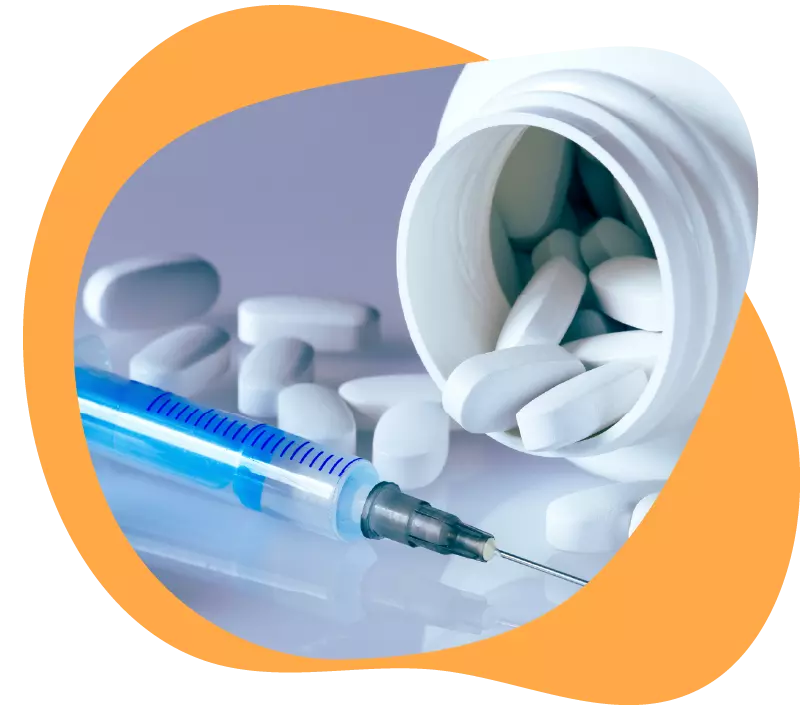 That’s opened the door for more people to start treatment in a primary care office, a telehealth visit, or even a community clinic. You can take buprenorphine treatment at home, adjust doses with your doctor, and build it into your daily routine.
But daily dosing has its challenges. You have to remember to take buprenorphine every day. Oral buprenorphine can be prescribed in 30-day supplies and taken at home. Because of this, there’s a risk that the medication could be taken by someone it wasn’t prescribed for. This is called diversion. These concerns are part of treatment planning, although many people take the medication safely and as prescribed.
Methadone is a full opioid agonist. This means it binds completely to opioid receptors, making it especially effective for people with severe dependence or those who haven’t responded to other medications. It usually comes as an oral liquid taken daily, but it can be prescribed in tablet form.
The challenge is access. Methadone for OUD can only be dispensed at specially certified opioid treatment programs, not by a regular doctor or pharmacy. Early in treatment, people often need to go to the clinic frequently (sometimes daily) to get their dose. Over time, some people may qualify for take-home doses. The exact schedule depends on your progress in treatment, state rules, and your clinic’s policies.
Only after meeting federal and state stability requirements can someone qualify for take-home doses. That means reliable transportation and a flexible schedule are necessary.
Since 2024, there have been substantial changes in how methadone can be administered. Physicians now have more flexibility in determining who qualifies for take-home doses of methadone, and treatment programs now have an expanded ability to provide them.
Methadone remains one of the most effective options available, and it’s particularly well-suited for people with longer histories of heavy opioid use. Finding and working with a methadone clinic is an important part of successful treatment.
Other types of MOUD are injected. Because you don’t have to take them every day, they may fit more easily into your life and routine.
Sometimes called extended-release buprenorphine or injectable buprenorphine, it delivers the same active ingredient as Suboxone but in a slow-release form that lasts weeks or a month. Instead of remembering a daily dose, you get a shot from a healthcare provider, and the medication is released gradually over time.
Two injectable buprenorphine brands are currently available in the United States: Sublocade and Brixadi.
Sublocade versus Suboxone is one of the most common comparisons people search for when exploring treatment options. Sublocade is a once-monthly injection approved in 2017.
The medication (also known as RBP-6000) forms a solid deposit just under the skin after injection, releasing buprenorphine steadily over roughly 30 days. This produces more consistent blood levels than daily oral dosing, which can mean more reliable craving control and fewer peaks and valleys.
Brixadi is a newer injectable buprenorphine option approved in May 2023. One key difference is that Brixadi offers both weekly and monthly dosing options, while Sublocade is monthly only. Weekly doses range from 8 milligrams to 32 milligrams. Monthly doses range from 64 milligrams to 128 milligrams.
This flexibility can be useful early in recovery, when more frequent check-ins and dose adjustments may be needed. Both Brixadi and Sublocade injections are given by a healthcare provider, and both help block the euphoric effects of opioids, making misuse less rewarding.
Changing from oral to injectable buprenorphine is a common transition. It’s typically smooth because both medications contain buprenorphine.
Before switching, your provider will make sure buprenorphine is controlling your withdrawal symptoms and cravings. Some people switch after a period of daily buprenorphine, but the exact timing can vary based on the product and your situation.
If you’re ready to switch, your provider will give the injection in the clinic. Many people start with a higher monthly dose at first and then move to a lower monthly dose later. But the plan can be different depending on your needs and the medication your clinic uses.
The main limitations of injectable buprenorphine are also worth mentioning. You must get to a clinic for every shot. If transportation is difficult, that’s a real barrier. And you can’t adjust your dose at home if a difficult week calls for more support.
Side effects are generally similar to oral buprenorphine — nausea, headache, and constipation — with the addition of injection site reactions like skin color changes or itching.
Naltrexone works differently from buprenorphine and methadone. It’s an opioid antagonist — a blocker that occupies opioid receptors and prevents any opioid from producing effects. It also doesn’t relieve withdrawal symptoms, and it may not reduce cravings as reliably as methadone or buprenorphine.
Extended-release naltrexone (Vivitrol) is a once-monthly injection into the muscle. It may be a good option for people who feel ready to stay opioid-free and prefer not to take a medication that activates opioid receptors.
The biggest barrier to naltrexone is the starting requirement. Because naltrexone shouldn’t be used by anyone currently physically dependent on opioids, people must be fully detoxified and opioid-free for at least seven to 10 days before the first dose. Starting too early can trigger severe withdrawal.
That detox period is hard. Many people don’t make it through, which means naltrexone has a higher dropout rate at the start of treatment compared to buprenorphine-based options.
However, a recent study suggests that naltrexone can be as effective as buprenorphine at reducing opioid use in the short term for people who stay on it. It’s also a good fit for people with co-occurring alcohol use disorder because naltrexone is also approved for alcohol use disorder.
The American Society of Addiction Medicine (ASAM) emphasizes that all FDA-approved OUD medications should be available to all people who need them, and that treatment choice should be guided by individual needs, not a one-size-fits-all approach.
Here’s what that often looks like in practice.
If taking medication every day fits well into your routine, oral buprenorphine may offer flexibility and privacy. If it’s hard to remember a daily dose, injectable options can help by taking that step out of your routine.
Injectable medications require clinic visits. If getting to a clinic weekly or monthly is a hardship, oral buprenorphine, which can often be prescribed via telehealth and picked up at a pharmacy, may be more practical. Methadone requires the most frequent visits, especially early on.
People with severe, long-term opioid use often respond best to methadone or buprenorphine (oral or injectable). Naltrexone is typically better suited for people who have already completed detox and have a shorter history of daily use.
Buprenorphine and methadone can be started quickly because you don’t need to be opioid-free first. You must be opioid-free to use naltrexone.
Mental health conditions, liver disease, pregnancy, and other health factors can influence which medications are safest and most effective. Discuss your full health picture with your provider.
If you’ve tried oral buprenorphine but had trouble taking it every day, switching to an injectable form may help it fit better into your life. If clinic-based care hasn’t worked well for you, telehealth buprenorphine visits may give you another option.
No medication works in isolation. Counseling and other support can help many people, but medication for OUD still works even if therapy isn’t available right away. Don’t delay starting medication just because you can’t start counseling yet.
On MyOpioidRecoveryTeam, people share their experiences with opioid use disorder, get advice, and find support from others who understand.
Have you tried both oral and injectable medications for OUD? What made the biggest difference in choosing the treatment option that worked for you? Let others know in the comments below.
Get updates directly to your inbox.




 Continue with Facebook
Continue with Email
Continue with Facebook
Continue with Email
Continue with Facebook
Continue with Email
Continue with Facebook
Continue with Email
Become a member to get even more




 Join
Join

 Your Privacy Choices

This is a member-feature!
Sign up for free to view article comments.
We'd love to hear from you! Please share your name and email to post and read comments.
You'll also get the latest articles directly to your inbox.