
Powered By


For many people in recovery from opioid use disorder (OUD), pain doesn’t disappear just because opioids are no longer part of the picture. The pain may have started before recovery, flared during withdrawal, or lingered afterward. Chronic pain and OUD often overlap.
Managing pain without opioids is a frequent topic of conversation among MyOpioidRecoveryTeam members, who’ve shared ways they cope with flare-ups, get through withdrawal, and keep moving forward in recovery. Their experiences show how pain affects daily life during recovery, and why support often needs to address both physical and emotional challenges.
Non-opioid pain care often works best when it includes more than one approach. Approaches that can help some people manage pain while using fewer opioids include:
For people in recovery from substance use disorders, chronic pain care may also involve an evaluation, non-opioid pain relievers, and a broader treatment plan focused on safe pain relief.
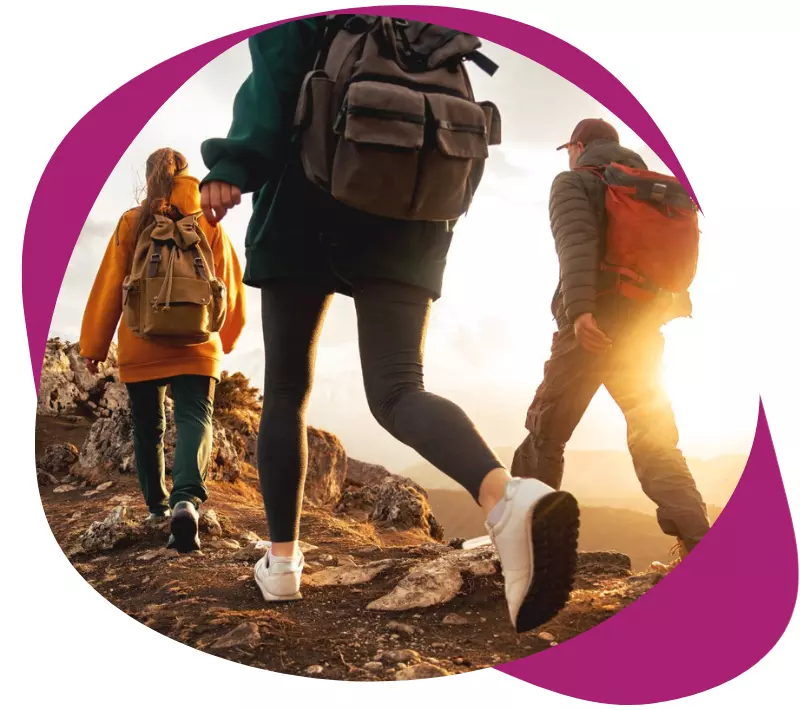
Members often describe finding what works through trial and error. For some, movement can make a meaningful difference. One member shared, “My dog ... has been especially supportive by keeping a smile on my face. My pain level was down enough that we were able to take a walk and a swim in the creek!”

Others build routines around what is available to them: “I have major drug allergies — can’t have ibuprofen, aspirin, NSAIDs. ... I have learned to live with it. I power walk and go to the gym. ... But when the weather gets bad, so do I. I do what I can when I can.”
Some members also describe relying on determination and sleep routines while they try to avoid opioids: “I take a lot of Motrin — that’s all I take. ... At night, to be able to sleep, I take melatonin, and I might get four to five hours of sleep. My doctor wants me to take pain pills, but I’m not there yet. I’m very strong-minded — I think that’s why I’m not taking anything yet.”
Pain during recovery can be more than physical. It can affect your mood, strain relationships, and make grief harder to cope with — especially when the same substance once used to numb pain is no longer an option.
For some members, pain and recovery challenges can spill into family relationships. One member shared, “I suffer chronic pain, and the methadone really helps. My only problem is that my son refuses to see the methadone as a medication — he just sees it as another opiate addiction and won’t speak to me for about a year now. I miss him terribly, but I know that I’m not in the wrong. It is his problem. My life is getting better every day.”
For others, emotional pain can become part of the overall burden. One member reflected on what led to a relapse after years of sobriety: “I started using oxys again as a coping mechanism when I lost my oldest daughter last year. ... The oxys were a crutch and a coping mechanism for the pain I was feeling from her loss.”
These experiences show why support for pain in recovery may need to address emotional health and relationships, not just physical symptoms.
People living with both pain and OUD may need ongoing pain care that balances the possible benefits and risks. In some cases, methadone or buprenorphine treatment for OUD can also help manage pain.
Still, many members describe a gap between medical advice and the care they receive. One member wrote: “When you tell your doctor that you’re asking for HELP with your opioid addiction — now you’re on a medication-assisted treatment. But they will never tell you that from now on, no matter how severe an injury or postoperative pain is, you are no longer deserving of pain management and you shall not receive opioids ever again.”
Another member described feeling stuck with nowhere to turn: “I am in severe pain all the time. ... I can find absolutely no one to prescribe pain meds.” They said they often go to an emergency room when the pain gets bad enough. “I hate doing that because I know how it looks, but what are we supposed to do????”
If you are facing this kind of barrier, it may help to ask whether your care team can refer you to a clinician or clinic that treats both pain and substance use disorders.
Managing pain without opioids can be hard, especially when the pain is ongoing. There is no single answer that works for everyone, and what helps can change over time.
Still, members’ stories show that progress is possible, even when pain has not fully gone away.
One member, reflecting on two years of sobriety after 17 years of use, shared these words of encouragement: “I don’t remember much, and I’m kind of glad I don’t. All I can say is: Yes, you can get off opioids because I’m proof. I still have the pain that I was on opioids for. But I have a good relationship now, and I know you can do it.”
Recovery looks different for everyone, and pain may still be part of the process. Finding the right care, support, and coping strategies can take time, but you do not have to figure it out alone.
On MyOpioidRecoveryTeam, people share their experiences with opioid use disorder, get advice, and find support from others who understand.
What has helped you manage pain during recovery, and what has been the hardest part? Let others know in the comments below.
Get updates directly to your inbox.


 Continue with Facebook
Continue with Email
Continue with Facebook
Continue with Email
Continue with Facebook
Continue with Email
Continue with Facebook
Continue with Email
Become a member to get even more





 Join
Join

 Your Privacy Choices

This is a member-feature!
Sign up for free to view article comments.
I need something that actually treats pain & I e been take per over for 20 years
We'd love to hear from you! Please share your name and email to post and read comments.
You'll also get the latest articles directly to your inbox.