
Powered By


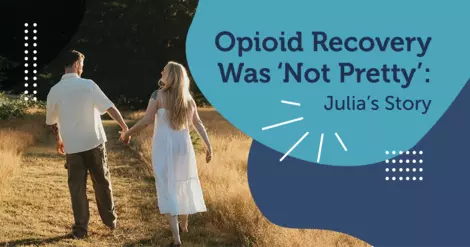
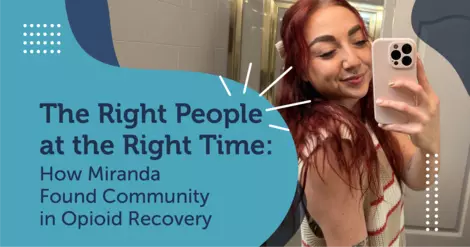
Miranda Scott described her path through addiction and recovery as anything but straightforward. “My journey is not pretty. My journey is not spotless or linear or this or that,” she said. “It’s been a journey of ups, downs, sideways, all around the world — and all of that helps me find myself.”
That winding journey began early, starting in Miranda’s teen years. “Opiates became a part of my life pretty young — 16, 18,” she said.
At the time, Miranda didn’t fully understand what was happening. Addiction had already taken hold. “I don’t even think I realized at that point what was going on because I was so far into it,” she said. “I don’t think I had breathed a sober breath for two years at that point.”
My First Rehab Experience Saved My Life
Miranda Scott shares what helped save her life from opioid addiction.
00:00:00:00 - 00:00:25:06
Miranda Scott
My journey is not pretty. My journey is not spotless, or like linear, or this or that. It's been a journey. Ups, downs, sideways. You know, all around the world. All of that helps me find myself. Opiates became a part of my life pretty young, sixteen, eighteen. I don't even think I realized at that point what was going on. The only thing I could think was, I need more, I need more, I need more, I need more.
00:00:25:07 - 00:00:44:19
Miranda Scott
I knew nothing about addiction until my first rehab. The first awakening was so brutal. Agony. I didn't know that there was a solution. I didn't know that there was a different way to live. I thought one day this is going to kill me. And like, I wish it would come sooner. But I did find hope when I went to rehab for the first time. I found the 12 steps.
00:00:44:20 - 00:01:05:02
Miranda Scott
I found people that were just like me finally, because I was the black sheep in my family for so long. My first rehab, that was the first time I experienced like, unconditional love, and it gave me space to let all of that out because I'd been crying out for so long, and I'd been shut down for so long that I didn't think anybody was willing to listen to me.
00:01:05:04 - 00:01:11:09
Miranda Scott
But that place, it really did save my life. Learn more and connect at MyOpioidRecoveryTeam.com.
Miranda described a relentless cycle of craving as her substance use deepened: “The only thing I could think was, ‘I need more, I need more, I need more, I need more.’ And that’s what I did.”
Without knowledge about addiction or recovery, Miranda felt stuck and alone. “I knew nothing about addiction. I didn’t learn anything until my first rehab,” she said. “Before I got there, I was in such a dark place. … Self-harm is a big part of my story.”
If you or a loved one is having thoughts of self-harm or suicide, you’re not alone, and help is available. Call or text 988 to reach the Suicide & Crisis Lifeline in the U.S., or contact your local emergency number right away (such as 911 in the U.S. and Canada).
Miranda’s first experience in rehab marked a turning point, but it wasn’t easy. “The first awakening was so brutal, and it was just agony,” she said.
Looking back, Miranda remembered how little she understood at the time. “I didn’t know that I’d lost the power of choice. I didn’t know that there was a solution. I didn’t know that there was a different way to live,” she said. “I thought, ‘One day this is going to kill me, and I wish it would come sooner.’”
Despite that pain, rehab introduced something new — a sense of hope.
During her 125-day stay in rehab, Miranda learned about recovery, found community, and connected with others who understood her experience. “I did find hope when I went to rehab for the first time, and I found the 12 steps,” Miranda said. “I found people that were just like me, finally, because I was the black sheep in my family for so long.”
That sense of belonging was powerful: “I realized going there that it was OK to be myself. I can find a chosen family that understands me, that gets it, that’s going to support me.”
For Miranda, feeling heard and supported was especially meaningful. “My first rehab — that was the first time I experienced unconditional love,” she said.
After she’d felt shut down for so long, rehab gave her a place to open up. “It gave me space to let all of that out, because I’d been crying out for so long and I’d been shut down for so long that I didn’t think anybody was willing to listen to me,” Miranda said.
That experience left a lasting impact. “That place, it really did save my life,” she said.
Miranda reflected on what she needed most during those difficult years — reassurance and self-worth.
“If I could tell my past self one thing, I would say, ‘You are good enough, and you do deserve love,’ because that’s what I was searching for in drugs and alcohol,” she said. “I was just fighting so many demons. I didn’t know what to do.”
At its core, Miranda’s story is about searching for connection — and finally finding it in a healthier place. “That’s all I really wanted,” she said. “That’s all I really wanted, but I was looking in the wrong places.”
On MyOpioidRecoveryTeam, people share their experiences with opioid use disorder, get advice, and find support from others who understand.
Have you been to rehab for opioids? What was your experience like? Let others know in the comments below.
Get updates directly to your inbox.


 Continue with Facebook
Continue with Email
Continue with Facebook
Continue with Email
Continue with Facebook
Continue with Email
Continue with Facebook
Continue with Email
Become a member to get even more





 Join
Join
 Your Privacy Choices

This is a member-feature!
Sign up for free to view article comments.
Well done for speaking out. I’ve an addictive personality, at times I’d be seeking co codamol just for sake of getting it . Thank you
We'd love to hear from you! Please share your name and email to post and read comments.
You'll also get the latest articles directly to your inbox.