
Powered By


Miranda was clear about one lesson: Recovery didn’t work for her in isolation. “Recovery is impossible to do alone. I’ve tried to do it alone, and I failed every single time,” she said. “It was really hard for me.”
That realization shaped how Miranda approached sobriety. She came to see recovery as not just staying away from drugs or alcohol but also building a life that included others — people who understood her goals, shared her commitment, and could hold her up during shaky moments.
For Miranda, connection became part of the work of staying sober.
Finding the Right Fellowship Changed the Game for Me
Miranda Scott shares how recovery support and community changed her life.
00:00:00:02 - 00:00:19:01
Miranda Scott
Recovery is impossible to do alone. I know it's so hard. Sometimes you just gotta force the words out of your body. The benefit is so much greater than the fear. Whenever I'm trying to find a fellowship and friendship, it is really important to find the right meeting. I use the Meeting Guide app. It'll show you every meeting within like a 20 mile radius of you.
00:00:19:02 - 00:00:35:18
Miranda Scott
If I was a newcomer walking into a meeting, the first thing I would do is raise my hand and tell them I'm a newcomer. Tell them you're looking for a sponsor, looking for fellowship, whatever you are looking for. Most people will approach you. You can get a list of phone numbers and just go from there. If you find a meeting you like and you’re a repetitive face, you're going to make friends.
00:00:35:18 - 00:00:54:16
Miranda Scott
You know what I mean? Even if you're not sharing. There's one meeting I love. It's an AA group. 12 o’clock, no, not my vibe. The 6:00. It's okay. And then there's the 8 o’clock group. That late night crew is like where I found my people. You know, we're here to just end our day on a good note. I just fell in love with the fellowship
00:00:54:16 - 00:01:12:13
Miranda Scott
really. Having memories and, like, remembering them. Knowing that when I fall, they're there to pick me back up. It's been a really rocky road with my family supporting me through my recovery. I no longer have to go to my parents for emotional validation because I've got all of these people surrounding me that are giving me that. I found it.
00:01:12:14 - 00:01:22:19
Miranda Scott
It just wasn't where I thought it was going to come from. Once I stopped begging for that, it like changed the game. Learn more and connect at MyOpioidRecoveryTeam.com.
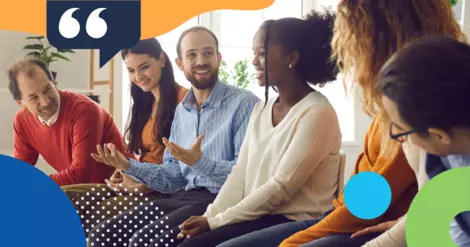
Miranda said it was important to find the right recovery meeting, especially when looking for both support and connection. “Whenever I’m trying to find a fellowship and friendship, it is really important to find the right meeting,” she said.
One tool helped her get started: “I use the meeting guide app. It’ll show you every meeting within a 20-mile radius.”
But Miranda wasn’t looking for just any meeting — she searched for one that felt right. She described how different groups had different energy. “There’s one meeting I love — it’s an AA group. I really love it,” she said. Some meeting times didn’t work well for her, but a later group stood out: “That late-night crew is where I found my people.”
That sense of fit mattered, and showing up consistently helped Miranda build relationships. “If you find a meeting you like and you’re a repetitive face, you’re going to make friends,” she said.
Miranda offered advice for people attending a meeting for the first time. It may be hard to walk into a room full of strangers and ask for help, but she believes honesty can open doors. “If I were a newcomer walking into a meeting, the first thing I would do is raise my hand and tell them I’m a newcomer,” Miranda said.
She encourages being direct about what you need, whether that’s a sponsor, fellowship, or simply support. “As a newcomer, it is hard to approach people, but if you tell them, then you’re going to be the favorite person in the room,” she said.
For Miranda, recovery communities were places where people reached back to help others.
Over time, Miranda said, she fell in love with the fellowship itself. “Going bowling, having memories, and remembering them … It’s really important for me to surround myself with people who are going to hold me accountable,” she said.
Miranda described sobriety in simple, determined terms: “I want to win every day. For me to win every day, it’s staying sober.”
She wanted people around her who were moving in the same direction as her. “When I fall, they’re there to pick me back up. They can be my legs when I can’t stand. They stand for me,” she said.
That support meant even more because her family relationships had been painful and complicated. “It’s been a really rocky road with my family supporting me through my recovery,” Miranda said. She had once looked to her family for emotional validation, but “I was never going to get it,” she said.
Instead, Miranda found care and understanding elsewhere by “building my own family, my own community, my people,” she said. “I found it — it just wasn’t where I thought it was going to come from.”
On MyOpioidRecoveryTeam, people share their experiences with opioid use disorder, get advice, and find support from others who understand.
Have you attended recovery meetings? What was your experience like? Let others know in the comments below.
Get updates directly to your inbox.


 Continue with Facebook
Continue with Email
Continue with Facebook
Continue with Email
Continue with Facebook
Continue with Email
Continue with Facebook
Continue with Email
Become a member to get even more

 Join
Join
 Your Privacy Choices

This is a member-feature!
Sign up for free to view article comments.
Meetings were, and still are, my salvation. My situation was a little different than some. I walked in to the Sat. night meeting and there sat many people I knew and they embraced me. I got active… read more
We'd love to hear from you! Please share your name and email to post and read comments.
You'll also get the latest articles directly to your inbox.